

PATCH TESTING FOR SKIN ALLERGIES
Have you ever had a rash that just won’t go away?
Many people don’t know they have an allergy because reactions are often delayed. Although we can’t make you less allergic, we can help determine what you’re allergic to so you can avoid products with those ingredients in the future.

Patch Testing Frequently Asked Questions
-
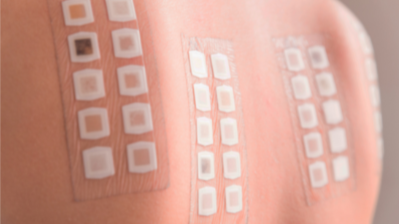
Patch testing is a painless procedure that is performed when there is a concern for allergic contact dermatitis. This form of testing involves having patches placed onto your back to detect whether you have an allergy to something that is coming into contact with your skin. Common culprits are jewelry, fragrances, latex, soaps, poison ivy or dyes. Comprehensive patch testing has been demonstrated repeatedly to have a much higher probability of yielding a diagnosis of a specific allergy, compared to limited patch testing, thus leading to a much higher probability of a cure.
-
We offer the NAC-80 North American 80 Comprehensive Series of patches at The Skin Firm which is a comprehensive panel of 80 of the top allergens that may cause an individual to develop contact dermatitis. During the procedure, the patches containing small chambers will be taped to your back for 48 hours using hypoallergenic tape. The patches contain potential causes such as fragrances, hair dye, nickel, and preservatives. After 48 hours you return to the office to have the patches removed and we examine your skin to see if a rash has occurred in response to one of the patches. We have you return for an additional visit after 72 hours to examine your skin a second time as well. You will be provided with detailed information about the allergens you react to, where they can be found and how to avoid them.
-
There are many things to keep in mind to prepare for a patch test:
Don’t expose the test area to the sun or tanning beds for a week or two before testing.
Don’t use medicated lotions, creams or ointments on your skin where you’ll have the testing (usually your back) for at least a week before testing.
Don’t use moisturizers on the test area on the day of or during testing.
Let your provider know if you’re pregnant. While patch testing won’t hurt you or the fetus, changes in your immune system while pregnant can affect your results.
Stop taking antihistamines and/or prednisone for 14 days prior to testing.
Let your provider know if you’re taking prednisone or any other medications that can weaken your immune system. These can affect the results of patch testing.
Your provider may have you shave body hair on your back and/or arms the night before they place your patches. Use an electric razor to avoid irritating your skin.
At your first appointment and while the patches are on, wear loose clothing that you can get on and off easily (for example, you might want to wear button-down shirts since you may not be able to lift your arms above your head easily with the patches on).
At your first appointment and throughout the week of the test, wear dark shirts or ones that you don’t mind getting stained from the ink that your provider uses to mark the patch areas.
If you have long hair, pull it up off your back for your appointments so it doesn’t interfere with placing or removing the patches.
-
Your first appointment is the longest and may last up to 90 minutes. Tiny quantities of 80 antigens will be placed on your back in thin chambers. Tape will be applied over the top of the chambers to assure proper occlusion. These chambers will remain on your back for 48 hours. It is important to keep the area dry and free of all products during the entire testing phase, which is approximately 4-5 days.
When you return in 48 hours, the tape and the chambers will be removed so we can examine the area being tested. The back is marked with a black felt tip pen to identify the test sites. You will return again in another 24-72 hours for a final evaluation.
-
During a patch test, you must keep the patch area dry, avoid sweating, and not scratch or remove the patches for 48–96 hours, as moisture and movement can cause false results.
-
After the test, you may have irritated skin or patches of skin that are lighter or darker than the area around them (discoloration). This should clear up on its own in a few days.
It’s rare, but some people experience severe allergic reactions, like anaphylaxis. This usually happens within a few hours of applying the patches. Ask your provider what symptoms to look out for and when to contact them or get medical attention.
-
There are over 200 known allergens, many of which are found frequently in our daily lives. When an allergen contacts the skin, it results in an inflammatory cascade that can appear as itchy scaly red skin rashes. This can be a long-term problem unless the causative agent is identified and avoided.